5 min read
Mar 17, 2026
Retrospective Risk Adjustment for Providers: What It Actually Takes
Medicare Advantage plans used to run retrospective risk adjustment on all of their members. They invested in teams, tools, and vendors to find diagnoses that are supported in the chart but never made it onto a claim.
For delegated lives, many of them have stopped.
When a plan delegates risk adjustment to a provider organization, the operational responsibility transfers. The plan moves on. The provider is now accountable for a function the plan used to run, often without the infrastructure the plan had to run it.
Diagnosis suspecting programs only capture HCCs coded correctly at the point of care. Coders miss things. And they never touch what outside providers documented about your patients. Retro closes this gap without creating any more work for your providers.
The Untapped Opportunity
Organizations that do retrospective reviews well will see a 1% to 5% increase in revenue, without a single change to provider workflow. Where you land depends on how mature your risk adjustment infrastructure currently is and whether you review charts from outside providers.
Do you have robust diagnosis suspecting, provider education programs, coding completed by experts in risk adjustment, and a strong handle on your payer files? If so, you’ll see closer to 1%. If none of those things are true, you’ll see a lot more. And regardless of where you land on the revenue side, if diagnoses submitted from your patient population don't hold up in a RADV audit, that's a contract conversation you don't want to have.
A few questions worth sitting with: Has your organization ever completed an ASM submission to a payer? Are clinicians doing their own diagnosis coding? Do outside specialists treat your patients but their charts never get reviewed? Are chronic conditions showing up in visits but not in your risk scores?
The Operational Reality
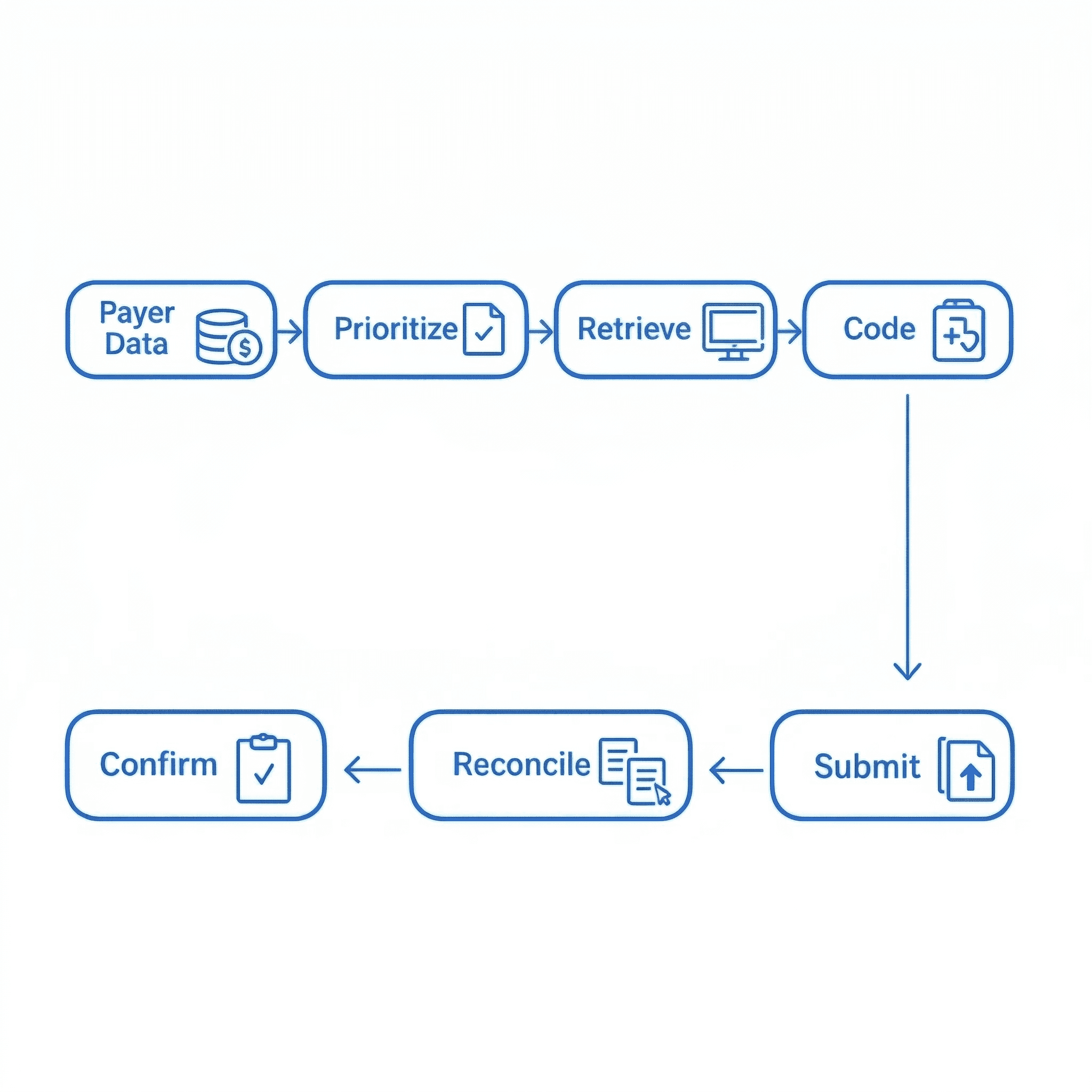
The workflow isn't complicated conceptually. Execution is where programs break down.
Start with the payer data. Before you touch a single chart, you need to understand what's already been submitted. Claims extracts, eligibility files, MMR/MOR reports, MAO-002 diagnosis files. These tell you what's captured and where the gaps are. Skip this and you're guessing at the universe you're working in.
Decide whether or not to review external charts. Many risk contracts delegate risk adjustment operations to the provider. In these cases, the provider organizations acting as an agent of the payer can retrieve charts from unaffiliated providers who treated their delegated patients, and generate supplemental code submissions without any actions from those providers. If your contract allows this, and you have the time and resources to do so, reviewing external charts can significantly increase the value of retrospective reviews. However, there are some things you should keep in mind:
Exhaust lower-cost sources before you chase. Full chart chase is expensive and slow. Work through what's already in the EHR, what you’ve collected through TEFCA or regional HIEs, and what clinical data networks can surface. Traditional retrieval is the fallback, not the default, and organizations that treat it as the default pay for it.
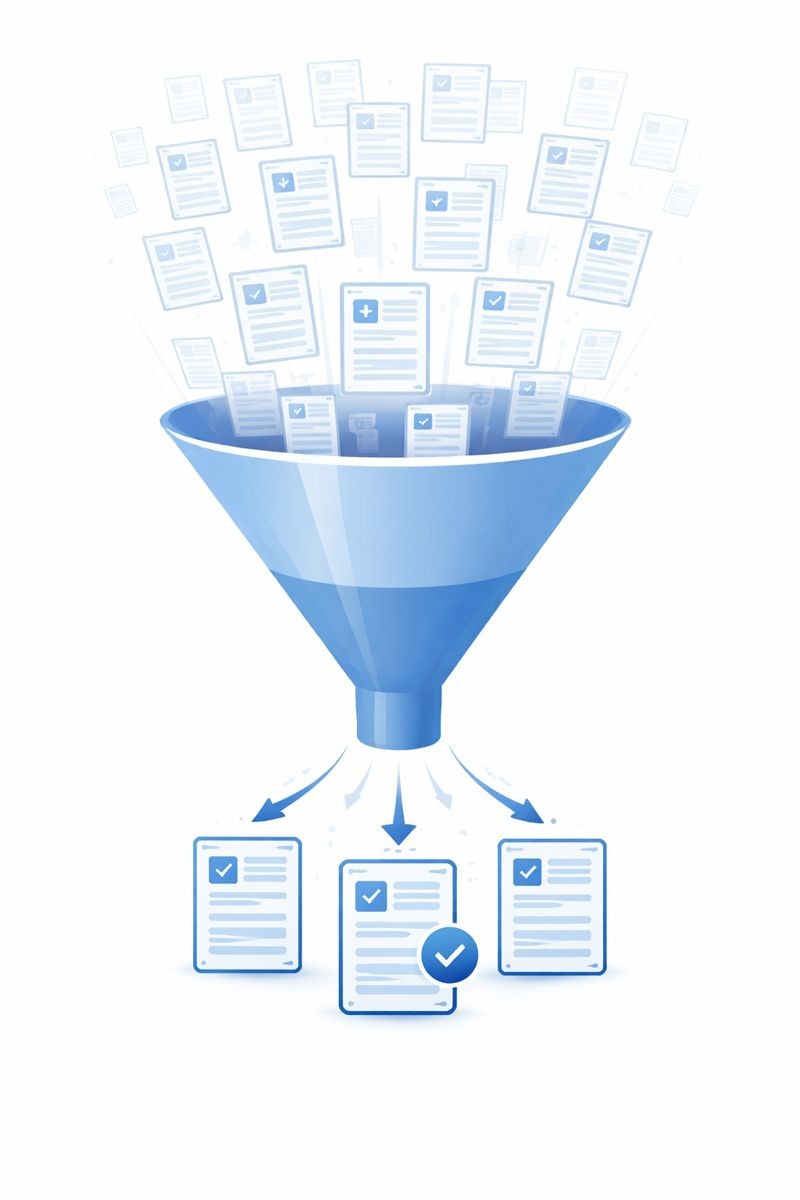
Prioritize before you retrieve. Chart retrieval is expensive and time consuming. The best programs score the chart population before anyone picks up a record, using clinical signals from claims, medication patterns, and diagnoses that have quietly disappeared year-over-year. Most organizations underestimate how much this matters. Volume without that filter is just cost with no direction.
Treat retrieval as an ongoing operation, not a project. Provider portals, fax workflows, follow-up queues, retrieval rate tracking. This doesn't run itself. Organizations that send a batch request and check back in a few weeks consistently leave charts on the table.
Code the charts that matter. This is where AI has genuinely changed the economics. If your organization can first use AI to identify the miscoded charts, and then filter those for what would be net new to what’s already in claims and MAO-002 files, your experienced auditors can spend their time and attention on the charts that matter most. You’ll not only move faster, you’ll ensure that every submitted diagnosis is coded correctly and defensibly.
Match charts to claim. Most payers require providers to match any coding change to a specific encounter. CMS has even proposed making this a hard requirement starting in 2027. Since provider names and dates often don’t match those on the claim, sophisticated algorithms are needed to perform these matches at scale.
Build, Submit, Review, Build. Each payor has a custom file format for their submission files. Best practice is to submit a test file to the payor at least 2-3 months before the CMS deadline to ensure the formatting is correct. The next step is generating the actual submission file to send to your payor(s).
Generating a submission file is not the finish line. Payers reject submissions. CMS adjustments don't always land as expected. Organizations that don't actively track what got accepted versus rejected are working blind on their actual captured value.
Most organizations that perform well run this cycle several times within each submission window. Each pass catches what the last one missed. One pass a cycle leaves too much up to chance. One pass a year leaves money on the table.
Where It Usually Goes Wrong
The failure points are predictable: payer data that's hard to interpret, chart retrieval that stalls out, chart to claim matching errors that corrupt submissions, coding that varies too much across reviewers, no systematic process for confirming what was accepted by CMS.
None of these are exotic problems. They're gaps that compound quietly until reconciliation makes them visible. At which point you're looking backward at a year you can't fix. And if any of those gaps touch diagnoses already submitted to the plan, the exposure doesn't stop at missed revenue.
The Larger Point
Retrospective risk adjustment doesn't require a clinical transformation. It doesn't require renegotiating provider contracts or changing how anyone delivers care. The documentation already exists. The visits already happened. What's required is the operational infrastructure to find what's there, submit it compliantly, and confirm it landed.
That sounds straightforward. In practice, most organizations are running some version of this without the full machinery in place. A vendor processing charts without real prioritization, submissions going out without acceptance tracking, payer data sitting uninterpreted. The program exists, but the revenue doesn’t reflect it.
Most organizations already have patients whose documentation supports more than their risk scores reflect. The question is whether the operation behind the program is built to find it.
HealthMC works with at-risk provider organizations across the full retrospective lifecycle. Some teams use us to fill specific gaps. Others hand off the entire operation.
Curious how HealthMC could help you? Let’s talk.